Museum gamification through stories and real exhibits.
Museum Adventures uses a story, exhibit clues and a clear finale to give visitors a reason to observe real objects. Charles White writes and builds the custom adventure for your museum. Your team provides accurate exhibit material and approves the experience.
Give visitors a question they want to answer, an object worth a closer look and a story they can uncover together.
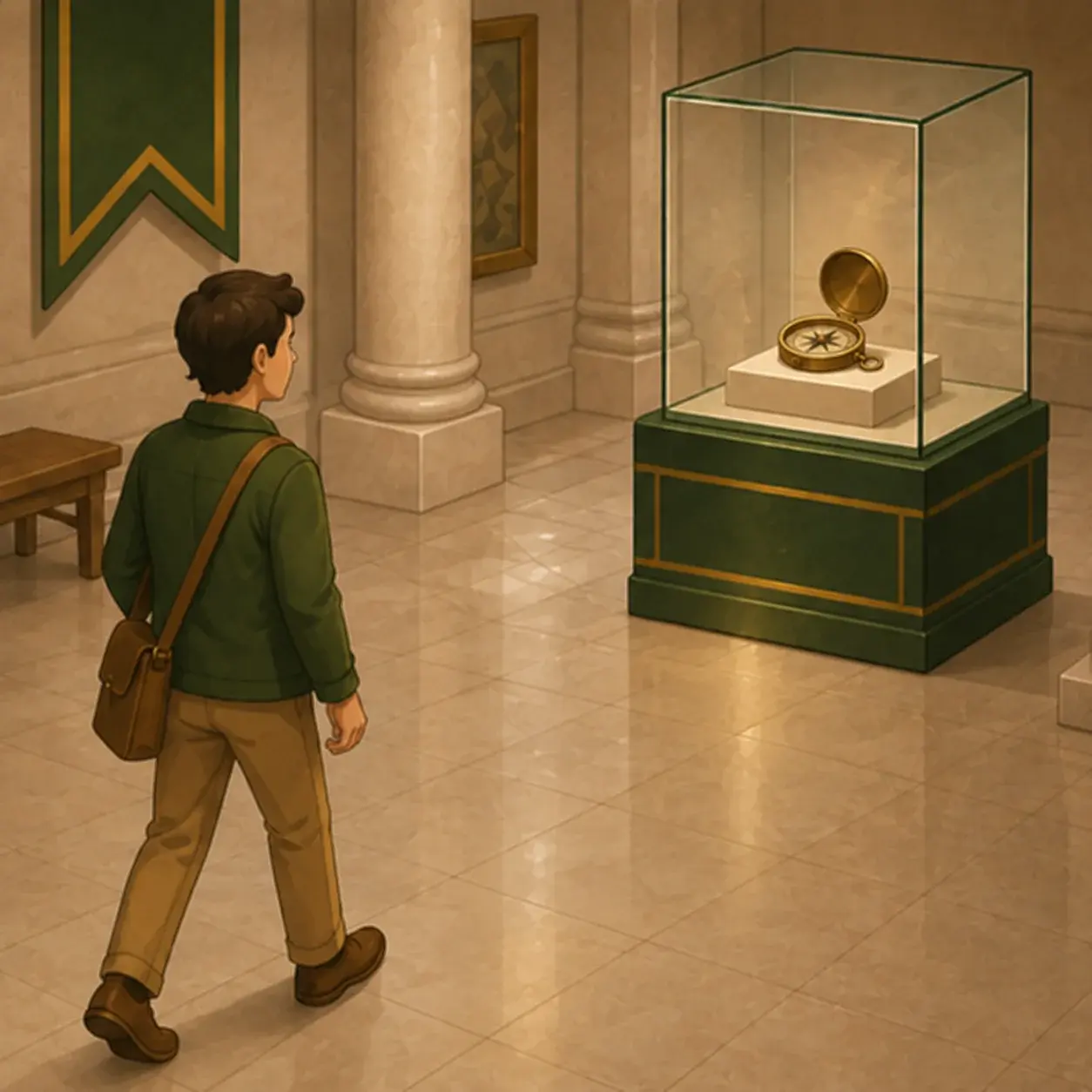
A story gives each observation a purpose.
Here, museum gamification means giving observations a purpose and showing how each discovery advances the adventure. It can have the searching quality of a museum scavenger hunt, with an original story and an ending built around the selected exhibits.
Give visitors a reason to begin
An original story introduces a question or mystery. Charles writes that invitation around the exhibits your museum approves, giving visitors a purpose for the discoveries ahead.
Make real objects part of the discovery
A maker’s mark, carved date or visible shape can become evidence for a clue. The phone asks the question; visitors inspect the exhibit to find the detail they need.
Connect the discoveries to an ending
Each answer advances the adventure. Charles connects those discoveries through the story and writes a finale that recalls what visitors found along the way.
Is this a good fit for your exhibits?
The strongest starting point is a selection of objects with details visitors can observe, a manageable route and room for an original fictional story. Your museum decides which facts and themes are appropriate. Charles turns that approved material into the adventure.
Before agreeing on a pilot, discuss what is on view, where visitors can go, your intended audience and what you want them to notice. Identify any route constraints or historical uncertainty so Charles can plan around them and your team can review the experience.
Try the moment a detail becomes a clue.
In The Curator’s Letter, the story introduces an unsigned letter on screen. A clue asks you to inspect the base of a brass compass. Finding the detail lets you continue the mystery.
Whitmore is a fictional sample you can play from anywhere. It includes the exhibit evidence on screen and collects no email.
Charles writes and builds. Your museum approves.
Charles writes the story and clues, builds the phone experience and prepares the starting QR code. He works from the exhibit material you supply. Agree on one pilot route and useful goals before building; your team reviews the experience before launch.
The narrative is fictional. Your museum’s historical facts remain distinct, and your team approves everything visitors see.
Meet Charles WhiteYour input and approval checklist
- Selected exhibits, accurate facts and any historical uncertainty.
- What is on view, permitted spaces and route constraints.
- Your intended audience, pilot goals and one working contact.
- Approval of the story, exhibit references, clues, route and final phone experience.
Optional permission to hear from your museum
Your adventure can invite visitors to share an email address and separately opt in to museum updates. Visitors can finish without signing up. Agree on whether to include that invitation as part of your museum’s approved experience.
What can the pilot tell you?
Choose useful goals with Charles before launch, then review the dashboard together after 30 days. It records participation in the adventure:
- Starts: visitors who begin the adventure.
- Step progress: how far visitors get through the story steps.
- Completions: visitors who reach the ending.
- Optional email opt-ins: visitors who choose museum updates, if that invitation is included.
These records describe actions in the adventure. They do not establish physical dwell time, learning, total attendance, return visits or revenue. Any broader outcome needs separate evidence and an agreed way to measure it.
Planning a self-guided museum experience
Does our team need to write the adventure?
No. Charles writes the story and exhibit clues and builds the complete phone experience. Your team supplies accurate exhibit material and reviews the proposed route, factual references, story and final visitor-facing content. You do not need a finished story idea.
Do visitors need to download a museum app?
No. One QR code opens the adventure in their phone browser, with no app download or visitor account. The phone provides the story and clues; the exhibits provide the details visitors need to notice.
Can a small museum use this with a small team?
Charles can plan one route around a manageable selection of exhibits. Agree on your team’s input, review work and starting setup before building. Once the approved experience is running, staff can point visitors to the starting QR code without guiding every stop.
Must visitors share an email address?
No. Visitors can finish the adventure without signing up. A museum adventure can include an optional email invitation with a separate choice to receive museum updates. The fictional Whitmore sample collects no email.
Explore how a museum adventure works or read about the museum storytelling process and approval role.
Let’s find the adventure in your collection.
Charles White will write and build a custom adventure for your museum, for free.
Three separate museums can each try one adventure on one route for a free 30-day pilot. It includes the story, exhibit clues, phone experience, starting QR code, dashboard access and a results review.
The free pilot requires a written agreement to share your museum’s name and approved results in a case study and on this site. You approve publication. Continuing after the pilot is a separate decision, with any paid terms agreed first.
Request your free pilotStart with your museum, name and email. Charles will reply to discuss the exhibits you want visitors to discover. Sending the request creates no commitment.